

Locked windows and two other conditions were a planning/zoning condition imposed on the approving of the condo development Heinzman Place (The Village by High Park as it was then known) directly because of the neighbouring rubber factory’s odour concerns during the development approval process.
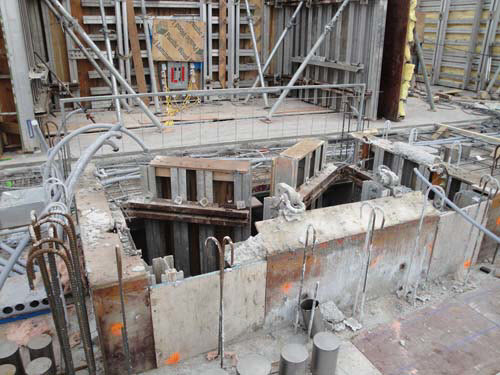
Now as the factory is being demolished, those conditions are seemingly no longer nesscessary. Yet the building still has Non-operable windows ( although easily bypassed) on the exposed faces, and no unfiltered air intakes on the industrial sides of the buildings.
In a long aged post, there is a video of the senior site superintendent for Deltera (the builder of Heinzman Place) speaking about the reclaiming of heated air in the building (2010) here is the link, https://www.youtube.com/watch?v=AJEwi-hQarY
In a 2008 Ontario Municipal Board (OMB) decision (PL071081) on variances needed for the project to go forward. The adjacent neighbour, National Rubber Technologies Corp. (NRT), a rubber parts manufacturing facility at 35 Cawthra Ave, appealed the original Committee of Adjustment approval. NRT was concerned that odours from its operations (which date back to around 1926 and past odours from operations of a foundry to 1917) could affect future residents.
As a condition to resolve the appeal and approve taller building heights (Variances 5 and 6), the OMB required:
“the owner/applicant shall provide and maintain to the satisfaction of the Chief Building Official of the City of Toronto, non-operable windows in the locations indicated in the attached Schedule ‘1’ to this Decision, unless any governmental authority requires operable windows as a matter of ‘applicable law’ within the meaning of the Building Code Act or regulations thereunder.”
These non-operable (fixed/locked-shut) windows were specifically on the side of the building facing the NRT rubber factory (the north and east facing windows-facing exposures closest to the industrial site).
The mitigation package for the Heintzman towers included:
No balconies on the north faces (closest to the factory).
Non-operable windows on the exposed faces.
No unfiltered air intakes on those sides.
This effectively created “sealed” conditions on the factory-facing side to minimize odour complaints.
Dispersion modelling showed potential odour exceedances without these measures, but the built-in restrictions kept the likelihood of issues low. The report notes the factory predates the condo, and NRT held a valid Environmental Compliance Approval at the time.


2 Comments
It’s north and east facing windows
Thank you, I updated that info.