

National Rubber Technologies Corp/Koneta, Inc plant is now near complete demoiltion, removing one of the Junction’s oldest plant structures. The building was occipied by the the EC Gurney & Co. Stove Foundry starting in 1917.
The Gurney Junction facility was almost located just northeast of Keele & Junction, along the rail-facing industrial lots. The formal city address is 35 Cawthra Ave, yet the offices were entered off Junction Rd.
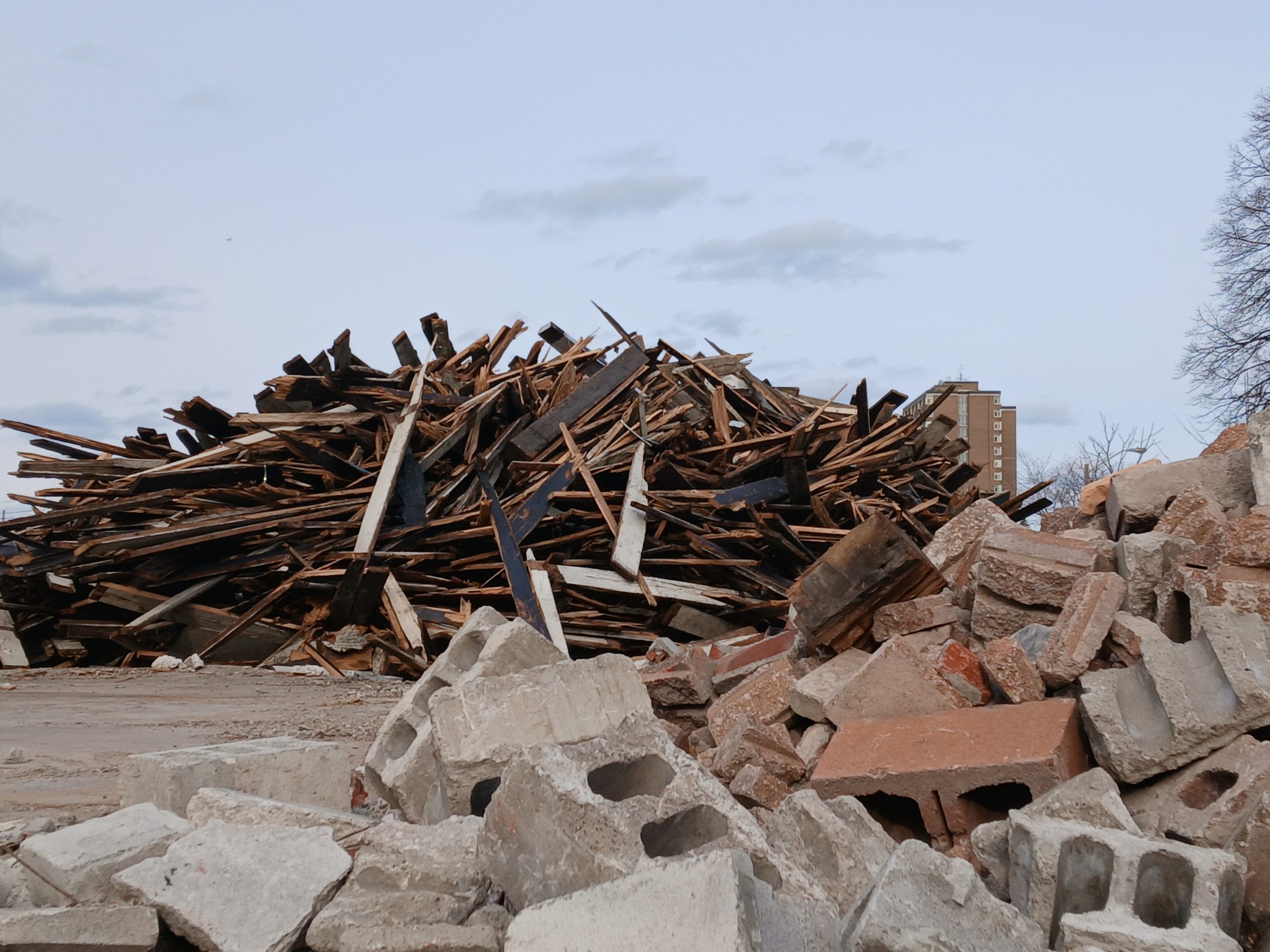
Presented here are photos of the demolition showing the manterials the orginial and later renovations.
For many years on this blog, I’ve created drawings that connect historical and present-day elements to show how current issues in the Junction may unfold and how historical issues were resolved. Recently, however, I’ve discovered that AI‑generated drawings can pull out far more detail from old or blurry photos—and even from new ones—than a person can, especially when the AI is prompted to look for specific features.
Below are three photos of the ongoing factory demolition on Junction Road and drawings that are intended to highlight details in the images that might otherwise be overlooked. After AI genetaion the drawing are reworked to tighen up the visual aspects and correct errors or simply drawing style.
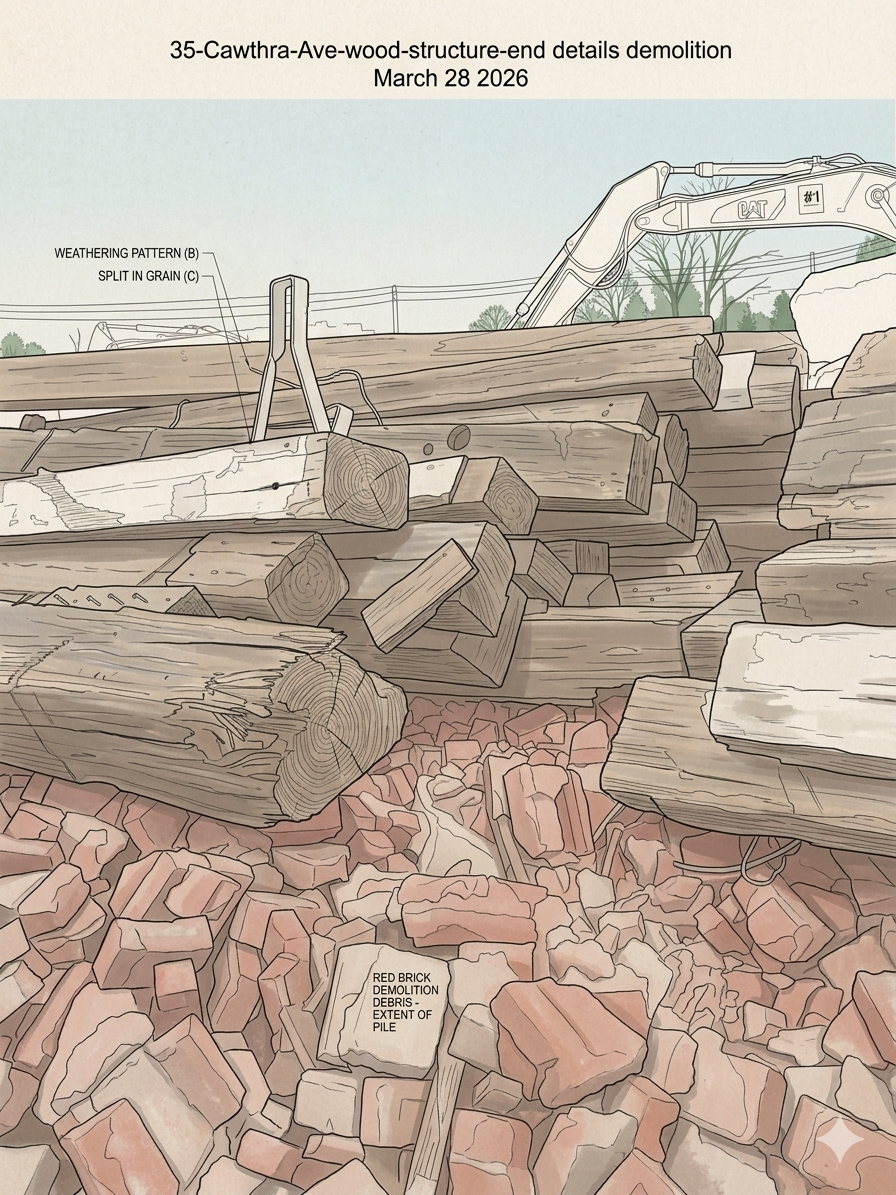
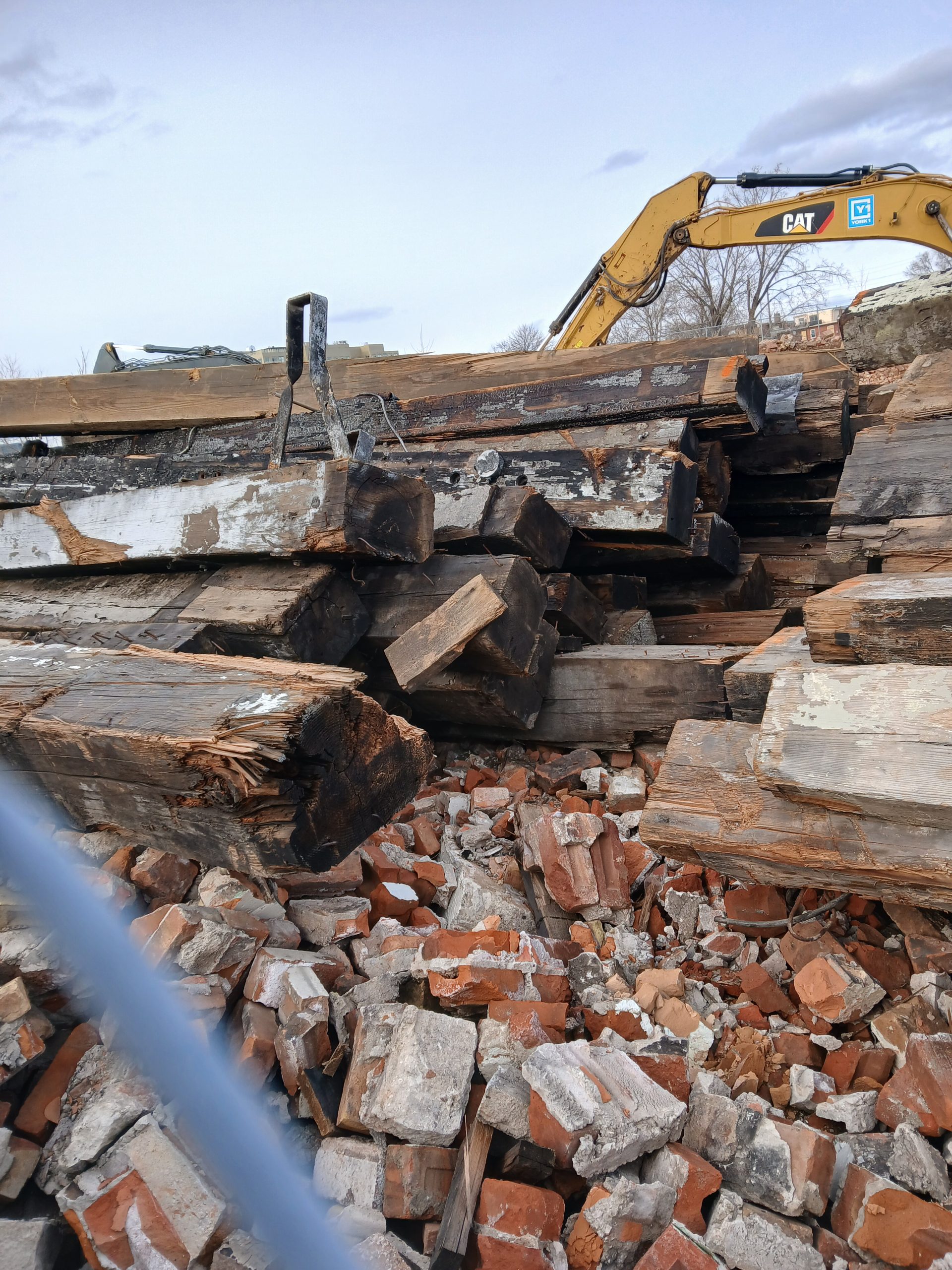
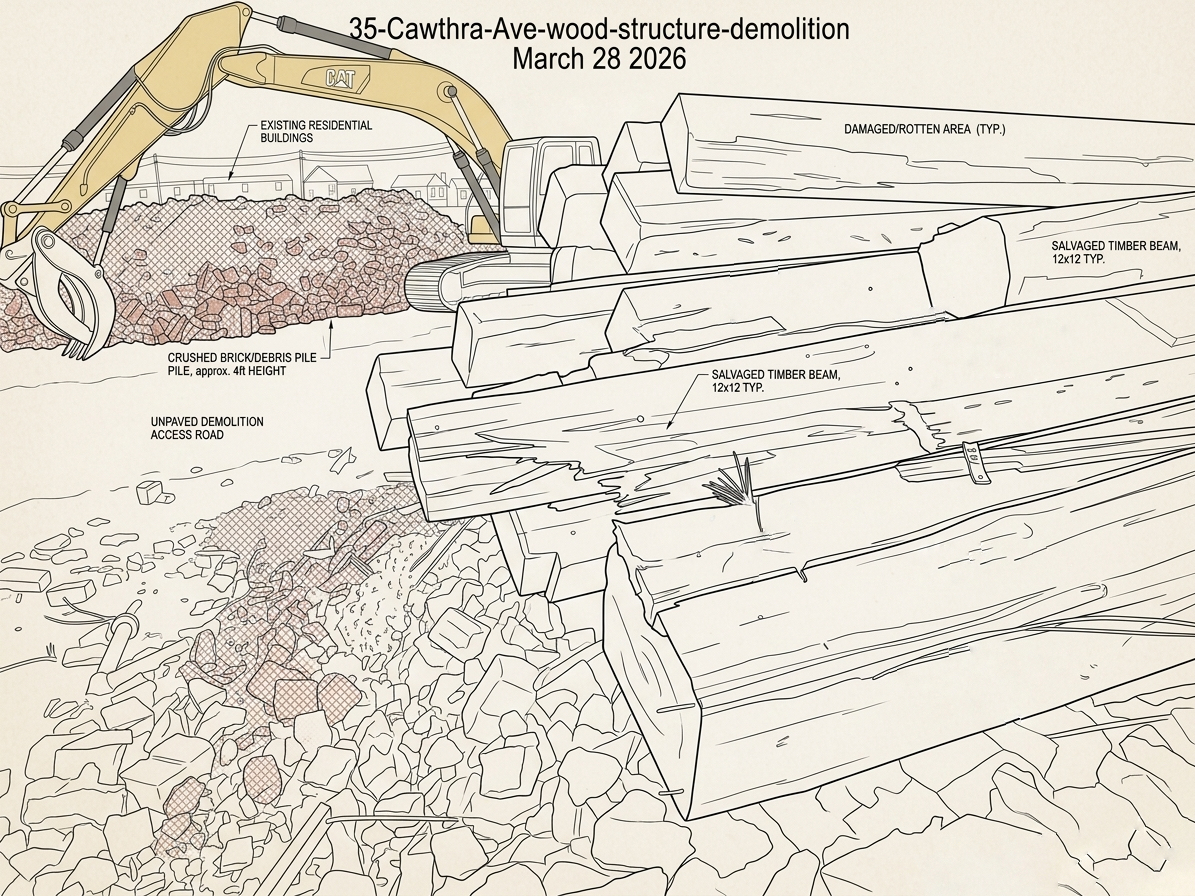
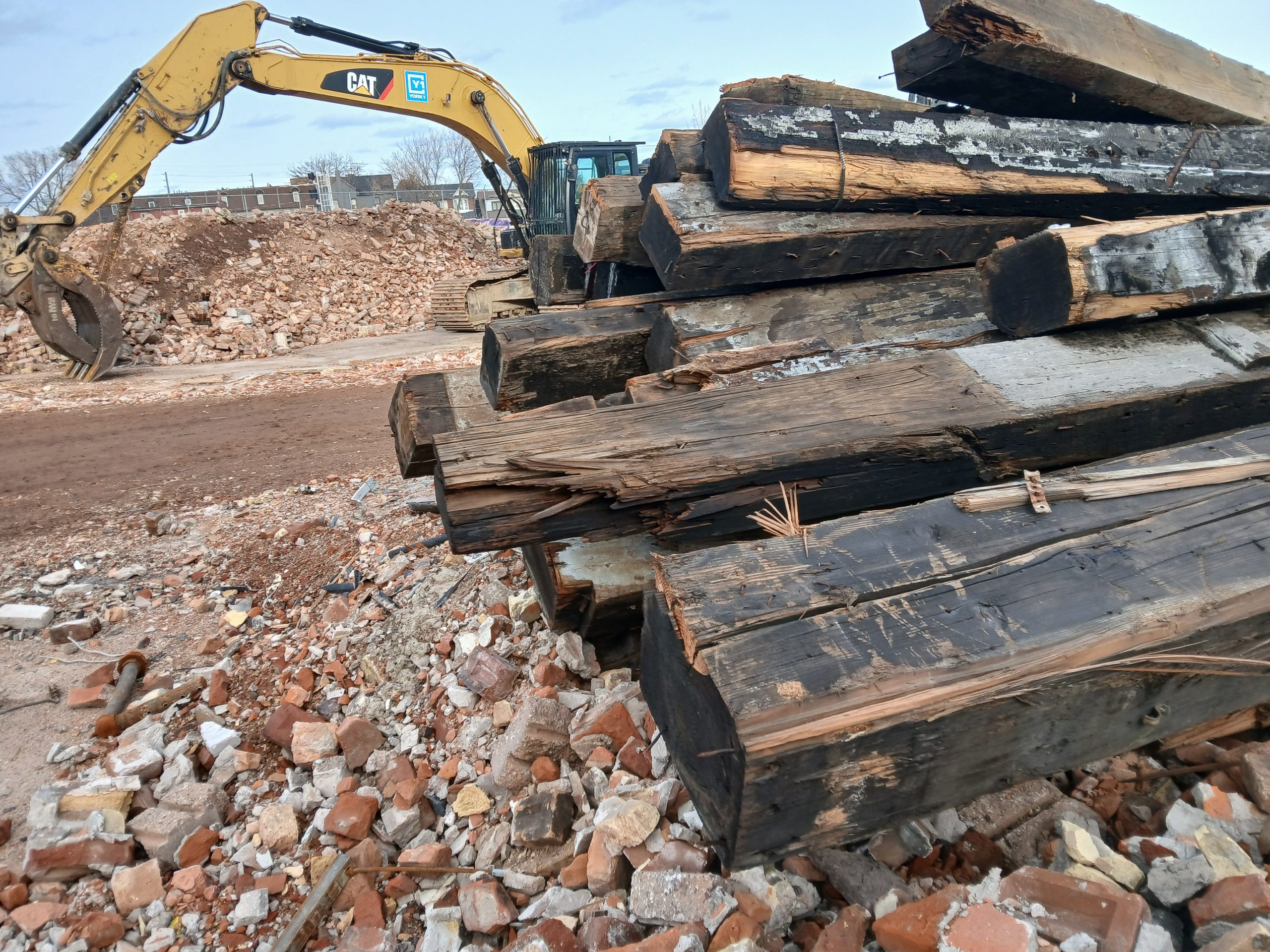
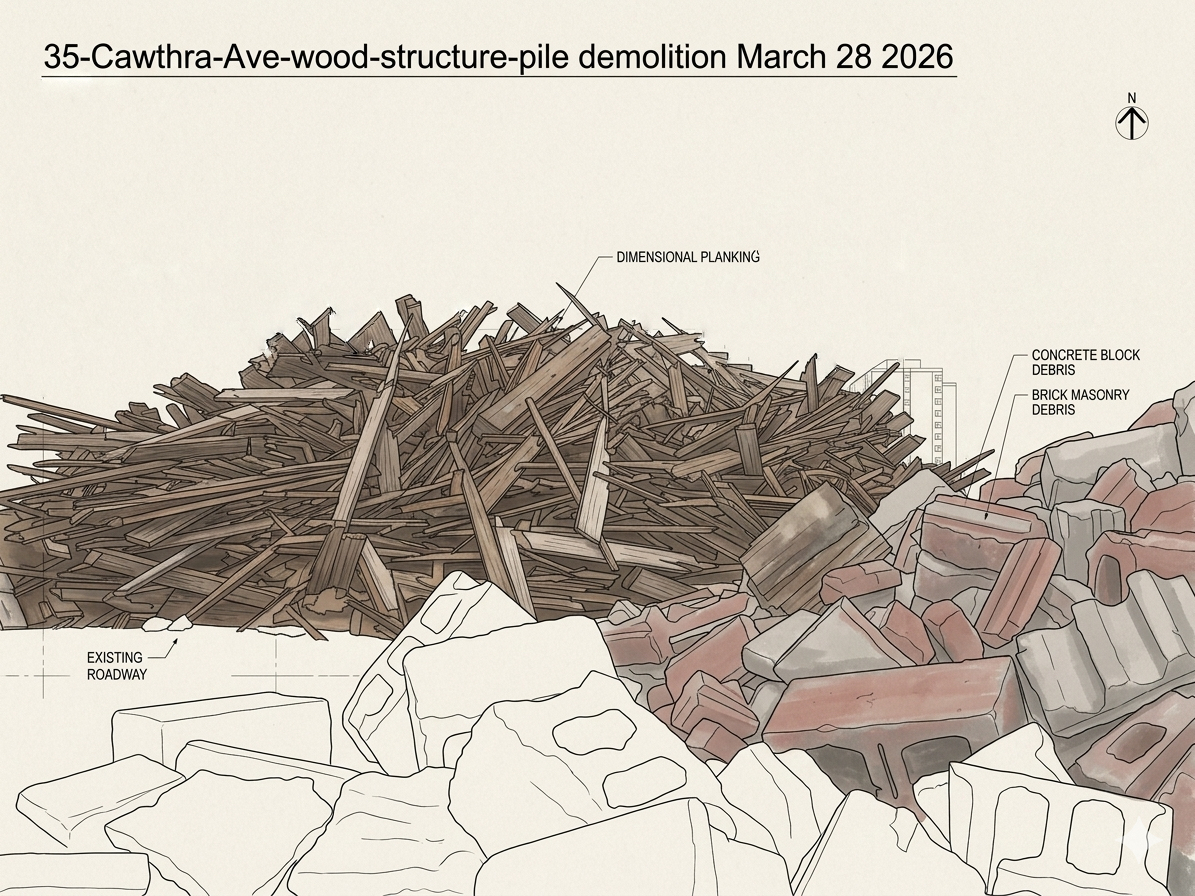
AI-generated drawings based on old photographs can reveal details that people might not notice in the original images. By enhancing contrast, reconstructing missing elements, or emphasizing patterns, AI can make faint structures, signage, building outlines, and spatial relationships easier to see. It can also “translate” complex or degraded visuals into clearer, simplified forms that highlight what matters most.
This is valuable because historical photos are often blurry, damaged, or visually crowded, making them hard to interpret-especially for people without specialized knowledge. AI-assisted drawings can bring forward hidden context, helping communities better understand how places looked, changed, and functioned over time. That clarity makes it easier to communicate local history, explain urban development, and even support discussions about preservation, planning, or redevelopment. In this way, AI doesn’t replace the original photograph-it acts as a tool to unlock and share the information inside it more effectively.


1 Comment
[…] Demolished in early 2026 – 35 Cawthra Ave former NRT rubber processing factory […]