What Is Happening at 108 & 162 Vine Avenue — And Why It Matters
A major land-use and redevelopment process has begun for properties at 108 and 162 Vine Avenue in Toronto’s Junction area, along with several smaller nearby properties. The issue is now before the Ontario Land Tribunal (OLT) after the City of Toronto did not make a decision within the legally required timeframe.
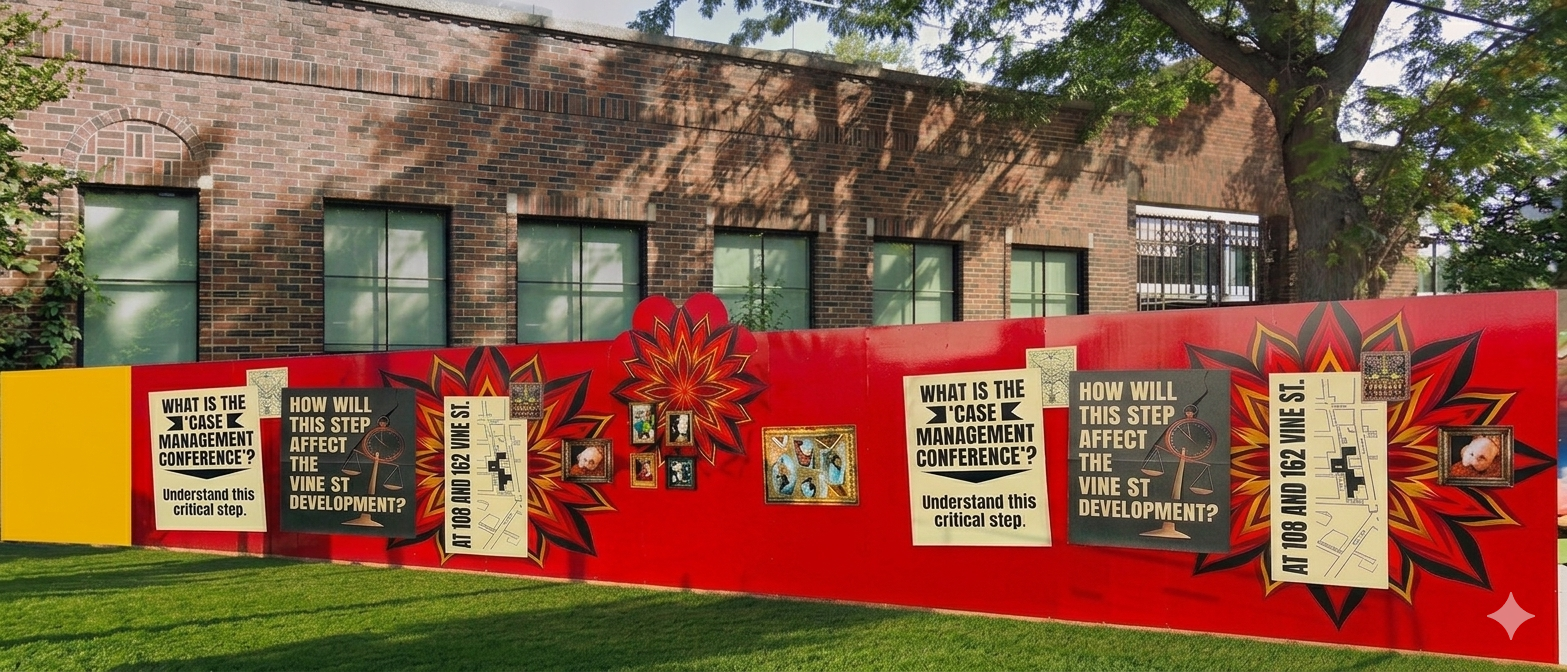
What Is the “Case Management Conference”? and how will this stepaffect the Vine St development at 108 and 162 Vine St.
A Case Management Conference (CMC) is the first step in the Ontario Land Tribunal process — not a final decision, but an organizational meeting that sets the stage for what comes next. At the June 12, 2026 CMC, the Tribunal will confirm who is allowed to participate, outline the key issues, decide what evidence will be needed, and schedule the future hearing where the real arguments will be made. Community members can attend as observers and may request participant status if they want their concerns formally recognized. This matters because the proposal seeks to change the land’s long‑term planning designation, opening the door to large mixed‑use redevelopment in the future. While no building heights or designs have been filed yet, the scale of the land involved means any future project could significantly overshadow the small‑scale, workshop‑and‑studio character of Vine Street. For many residents, simply understanding the process — and knowing that nothing has been approved yet — can help reduce some of the stress surrounding this major issue.
What Is the “Case Management Conference”? and how will this stepaffect the Vine St development at 108 and 162 Vine St.
This does not mean that a development has already been approved. Instead, the process has entered a formal appeal stage where planning policies, land-use designations, and future redevelopment possibilities are being debated.
below, much more detail about the Case Management Conference and what you can do.
What Is the Ontario Land Tribunal (OLT)?
The Ontario Land Tribunal is a provincial body that hears disputes related to planning, land use, development, zoning, expropriation, and municipal decisions.
In this case, the applicant — Vine Avenue Holdings Limited — appealed to the OLT because Toronto City Council did not make a decision on its Official Plan Amendment application within the required timeline under Ontario’s Planning Act.
The proceeding was started under subsection 22(7) of the Planning Act.
What Properties Are Involved?
The redevelopment-related application involves:
- 108 Vine Avenue
- 162 Vine Avenue
- 128 Vine Avenue
- 134 Vine Avenue
- 136 Vine Avenue
- 142 Vine Avenue
Together, the site covers about 1.10 hectares (10,999 square metres) on the north side of Vine Avenue in the Junction neighbourhood.
The lands currently contain:
- Commercial buildings
- Studios and workshops
- Offices
- A grocery store
- Fitness facilities
- A semi-detached residential house
- Large surface parking lots
What Is Being Proposed?
The applicant wants the City’s Official Plan changed.
Currently, the lands are designated as Core Employment Areas, which are generally intended for employment and industrial-type uses.
The proposal would redesignate the lands to:
- Mixed Use Areas
- Parks
This would potentially allow future redevelopment that could include:
- Residential uses
- Commercial uses
- Mixed-use buildings
- Expansion of nearby parkland
Importantly, the current application does not yet request:
- Specific building heights
- Density approvals
- Exact building designs
- Final zoning permissions
Instead, it is mainly about changing the long-term planning designation of the land.
Long-Term Land Value is a major element of this process , as Toronto City Councillor Gord Perks said during a zoom conference about the 108 development eailer this year, “changing the zoning from current allowed uses uses to want he developer wants with increase the value of the land”
Converting employment lands into mixed-use lands can dramatically increase development potential and property value over time.
What Are Likely Community Concerns?
Although no final development has been approved, issues that often arise in cases like this include:
- Loss of employment lands and industrial space
- Traffic and parking impacts
- Building height and density concerns
- Shadowing and privacy impacts
- Noise and vibration from nearby rail corridors
- Pressure on local infrastructure and schools
- Changes to neighbourhood character
- Potential gentrification and rising land values
- Parkland needs and public space access
The documents specifically reference concerns involving:
- Rail safety
- Noise
- Vibration
- Odour compatibility
because the site is directly beside the Canadian Pacific Kansas City (CPKC) rail corridor and nearby employment uses.
What Is the “Case Management Conference”?
The June 12, 2026 proceeding is not the final hearing.
It is a Case Management Conference (CMC), which is essentially an organizational and procedural meeting before the actual hearing process.
At the CMC, the Tribunal may:
- Identify parties and participants
- Define the issues in dispute
- Discuss evidence requirements
- Set hearing dates
- Discuss possible settlement or mediation
- Establish procedural rules
The hearing itself would happen later.
How Can the Public Find Out More?
1. Attend the OLT Conference or Hearing
OLT proceedings are generally open to the public.
The conference is scheduled for:
- Date: June 12, 2026
- Time: 10:00 AM
- Format: Video conference (GoToMeeting)
Members of the public can observe proceedings and monitor how the case evolves.
2. Request Party or Participant Status
Residents and community organizations can formally participate.
There are two levels:
Participant Status
- Allows written submissions
- Less formal
- Common for residents
Party Status
- Much more involved
- Allows presentation of evidence and witnesses
- Allows cross-examination
- May involve legal and planning professionals
Requests must generally be submitted at least 10 days before the Case Management Conference.
3. Monitor City Planning Files
The City of Toronto planning application file number is:
25 223395 STE 04 OZ